“I Did An Ice Bath Every Day For 2 Weeks And This Is How I Found It” - A First Person Account
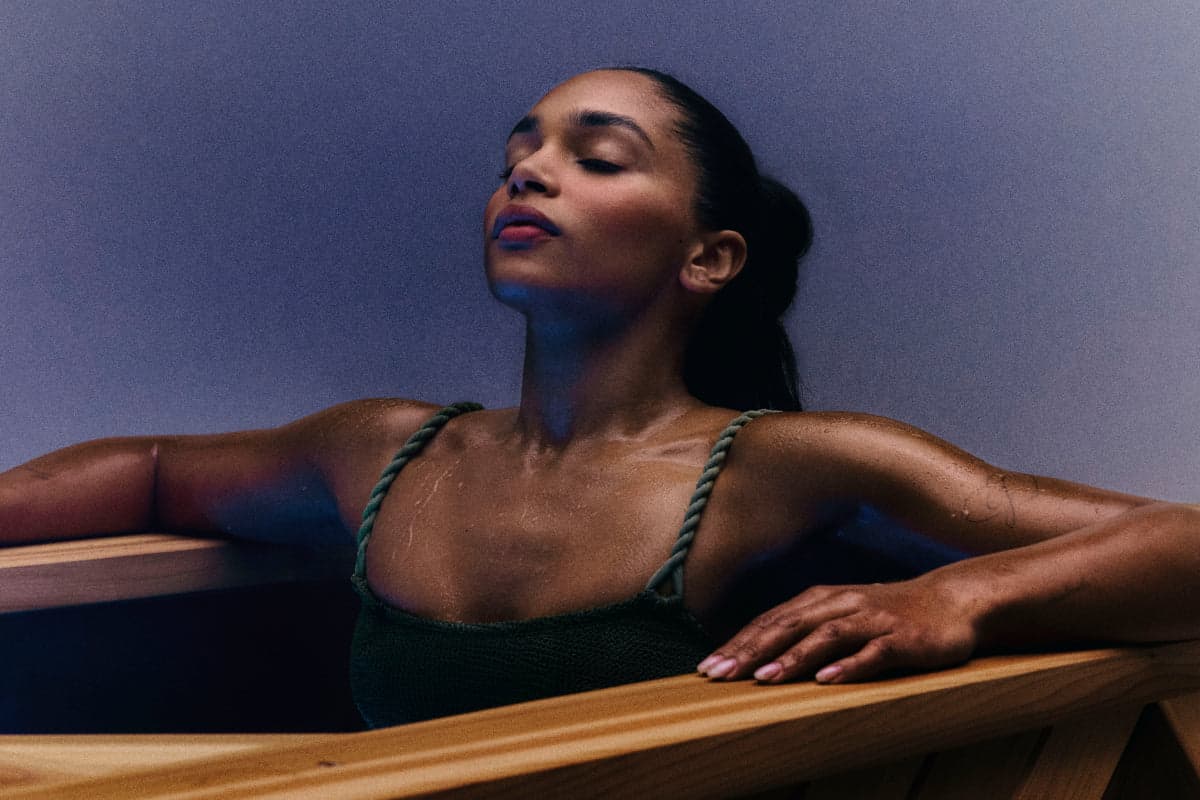
The concept is simple: Dunk yourself in cold water (usually below 15 degrees Celsius) for half a minute to a chilling 15 minutes.
Ice baths are on the rise, readily making it into every popular wellbeing conversation and brought to global attention by celebrities including Chris Hemsworth and Kate Hudson. But what exactly makes a cool dip so special? We took our very own Healf guinea pig, Harriet Renkin, aside to discuss the highs and lows of her immersive experience and what it ultimately resulted in for her training as an Olympic weightlifter, as well as being an advocate for achieving great mental health through simple holistic health practices.
Join us as we plunge into the depths of the physiological mechanisms, some practical guidelines, and the proven benefits of this glacial ritual.
A frosty beginning…
In popular literature, it is said to strengthen the immune system, reduce depression symptoms, improve blood circulation, enhance libido, boost calorie burning, and lower stress levels.
We investigate how these potential benefits can play out in real time through Harriet’s first person account of being an ice bath newbie.
Key ice bath takeaways for the athletic individual
For athletes, this process helps minimise delayed-onset muscle soreness (DOMS). Studies have shown that regular cold-water immersion can reduce inflammation and accelerate muscle repair. Beyond physical benefits, ice baths can also lower cortisol levels (the body’s stress hormone) while increasing dopamine, which enhances mood and focus.
The art of building tolerance
Harriet’s advice is to start small and use breathing techniques to stabilise the heart rate. Slowly, one should work up to two minutes and it is likely you will discover a strange sense of calm amidst the obvious discomfort. I continued to quiz Harriet on her 2-week experience with ice bathing:
Q: I imagine it was pretty hard to stick with at first?
H: Personally, when I started, I did find it was a shock to the system. But I read online about using guided breathing techniques beforehand as a method of mental preparation, box breathing, mainly. Over time, this really worked for me as I managed to work up to two minutes quite comfortably. Now, it’s become a rather welcoming part of my routine, both for my mental health and for the benefit of my training.
Q: What’s your ultimate advice for someone trying it for the first time?
H: Oh definitely do what I did and take it slow! The Move Method has a set of guidelines available which I found to be very helpful for getting clued up, because getting your heart rate down before you step in makes all the difference.
Q: What should you do immediately after getting out of an ice bath?
Rushing straight into a sauna or hot shower might seem like a good idea at the time but it could potentially make the effects less beneficial. What I tend to do is sit at room temperature afterwards until I feel readjusted, and if I feel like I need it, I will use some heat afterwards, like a sauna or hot shower. In the winter I tend to balance things out with some warmth more than during other seasons.
How do I ice bath correctly?
As per Harriet’s advice, here are some quick tips to get the most out of your session:
- Start small: Begin with 30 seconds and gradually increase your time.
- Use guided breathing: Techniques like box breathing (inhale for 4, hold for 4, exhale for 4, hold for 4), can help regulate your heart rate.
- Choose the right time: Morning baths boost alertness, while evenings can aid relaxation. But avoid doing it too close to bedtime, no closer than 4 hours to going to sleep.
- Optimal temperature: Aim for water around 15°C, if you are new to ice bathing.
- Consistency gets results: Regular practice is more effective than occasional dips.
- The post-bath protocol: Anecdotally, Harriet suggested that you let your body normalise for a few minutes before transitioning to a sauna or warm shower. There is also scientific evidence to support the concept of extreme temperature transitions in quick succession posing a threat to our health.
- Complement with mindfulness: Use the opportunity to practise focus and mental resilience for the very best results, mentally and physically.
- Last, but not least, listen to your body: Everyone is made differently, and whilst it is good to push yourself, don't overdo it if you feel it is not helpful for your physiological state.
Q: Shall we talk more about recovery now? As an elite athlete, how has cold therapy helped your athletic performance?
H: It’s important for me to mention at this point my hip and knee injury that made training even harder. Recovery was a real challenge for me, but since incorporating ice baths, I’ve noticed less muscle soreness and quicker recovery times. It’s made a noticeable difference for the rehab phase.
Besides the injury, my training loads have gone up. As I mentioned previously, this equates to around 10% more weight lifted compared to before I started regular cold therapy. It is an anecdotal statistic, but one that really sums up my experience in terms of the difference it made for me from start to finish of the 2-week trial.
Q: That’s really impressive, and do you think the timing of your ice bath makes a difference?
H: Well, I usually do it either on recovery days or a few hours after training. If you go straight from a workout into an ice bath, you might upset the balance of the natural inflammatory process, which is actually helpful for building strength. Timing is key, and it’s something I’ve been really mindful of since recovering from my injury.
Studies back this up, showing that ice baths are most effective for reducing inflammation and promoting recovery when used strategically.
Ice baths aren’t just for athletes. Research has shown that cold exposure can significantly reduce cortisol levels and improve dopamine production. These chemical adjustments can be extremely helpful for non athletes, perhaps those in high-power jobs to manage stress, reduce anxiety, and boost mental clarity.
Q: Ice baths are typically associated with athletes in popular media, but do you think they’re useful for non-athletes in equal measure?
H: Oh absolutely. The mental benefits alone are huge. I’d recommend it to anyone in a high-stress job or just simply looking for a mental reset. This is because, in essence, it’s not simply about recovery — the building of resilience and tolerance also counts for a lot mentally.
Are ice baths the right choice for everyone?
While ice baths appear to have a huge amount of benefits for a large spectrum of people and purposes, they aren’t always suitable for everyone.
While gradual exposure and proper preparation can help make the practice safe and effective, people with heart conditions, severe cold intolerance, or certain health concerns should consult with their doctor before ice bathing.
Key takeaways
There’s something undeniably invigorating about embracing the ice-cold plunge with an open mind and a sense of curiosity.
In Harriet’s experience as an elite athlete, the two-week ice bath challenge was a success on many fronts. Her insights have taught us that ice baths are not just for athletes — they can be a versatile tool that can aid in muscle recovery, enhance mental resilience, and promote relaxation.
Start small, stay consistent, and breathe through the discomfort. You could be truly amazed at what you might gain.
Recovery, resilience, and wellbeing all start with the right tools.
Explore ice bathing locations in London
In Harriet’s footsteps, take your recovery routine to the next level with The Move Method and Rebase. We recommend these expertly designed spaces offering state-of-the-art facilities for cold-water immersion, saunas, and holistic recovery practises, perfect for enhancing both mind and body.
Further reading: Can You Really Hack An Ice Bath Without The Ice?
Further reading: Cold Plunges Are Not For Everyone, Here’s Why
A Chiropractor’s Expert Guide To Beating Back Pain
Struggling with back pain? A London chiropractor shares practical, evidence-led tips to protect your back, improve recovery, sleep better, and reduce everyday aches.

When Should You Take Electrolytes?
Not just for workouts. A performance nutritionist explains when to take electrolytes, when water is enough, and how to time them for travel, illness, heat and everyday life.
Inside Long Lane: The Biohacking Countryside Club Built For Deep Rest
Step inside Long Lane, the UK’s new recovery-first countryside members’ club. EightSleep beds, contrast therapy, red light and longevity tools designed for deep rest.